Barcelona or Madrid — which is better for international property buyers?
Barcelona suits buyers who want Mediterranean lifestyle, coastline, and a lower cost base, with prime luxury property at €5,000–€9,000/m² and strong international schools in the Zona Alta. Madrid suits buyers prioritising political centrality, a larger business and financial market, and continental living, with prime prices at €5,500–€10,000/m². Both cities offer residency pathways post-Golden Visa. The right choice depends on whether you want sea or centrality — and an independent buyer's agent can help you decide and execute.
Key Facts
Barcelona prime: €5,000–9,000/m²
Madrid prime: €5,500–10,000/m²
Barcelona: Mediterranean coast, 300+ sunny days
Madrid: Continental climate, business & political centre
Both: non-lucrative & digital nomad visas available
Barcelona yields: 3.5–5% (indicative)
Madrid yields: 4–5.5% (indicative)
Figures indicative
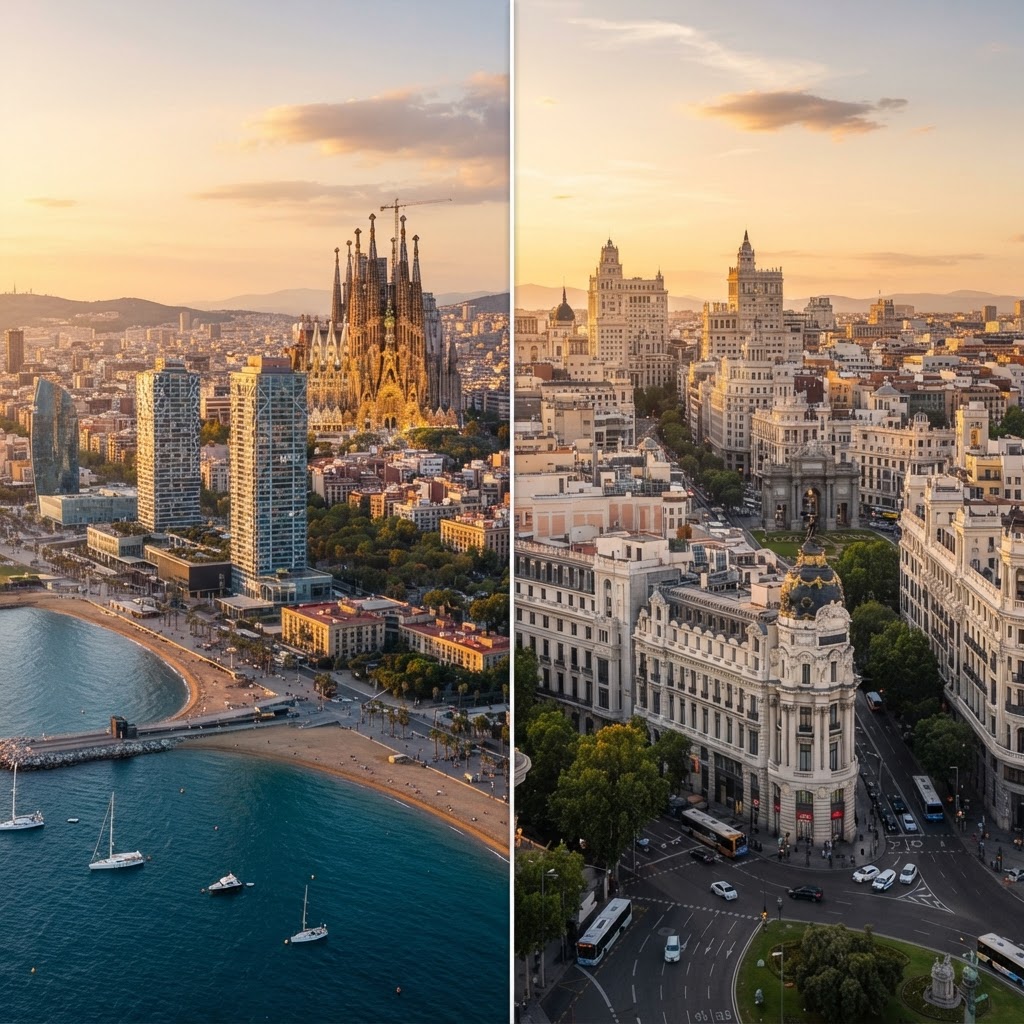
Barcelona and Madrid are Spain's two great cities — and for international property buyers, the choice between them is one of the most common questions we encounter. Both offer world-class lifestyle, strong international communities, and established residency pathways. But they differ fundamentally in character: Barcelona is Mediterranean, coastal, and design-forward; Madrid is continental, central, and politically powerful. This guide offers an honest comparison across the dimensions that matter to affluent international buyers, with a clear verdict by buyer type.
All figures are indicative, marked for confirmation with verified sources, and provided for educational purposes only. Last updated 2026.
How Do Barcelona and Madrid Compare at a Glance?
Factor
Barcelona
Madrid
Climate
Mediterranean; 300+ sunny days; coastal
Continental; hot summers, cold winters
Coastline
Yes — Mediterranean beaches within city
No — landlocked, ~3h to coast
Prime price/m²
€5,000–9,000
€5,500–10,000
Indicative gross yield
3.5–5%
4–5.5%
International community
Large; European, LatAm, North American
Large; Latin American, European, expat exec
International schools
6+ leading (British, American, French, German, IB)
8+ leading (equivalent depth)
Airport connectivity
BCN-El Prat; 15–20 min to Zona Alta
MAD-Barajas; 20–25 min to Salamanca
Purchase tax (resale)
ITP 10–13% progressive (Catalonia)
ITP 6–11% progressive (Madrid region)
Tourist licence regulation
Phasing out by 2028 (Barcelona city)
More permissive in central areas
Climate
BarcelonaMediterranean; 300+ sunny days; coastal
MadridContinental; hot summers, cold winters
Coastline
BarcelonaYes — Mediterranean beaches within city
MadridNo — landlocked, ~3h to coast
Prime price/m²
Barcelona€5,000–9,000
Madrid€5,500–10,000
Indicative gross yield
Barcelona3.5–5%
Madrid4–5.5%
International community
BarcelonaLarge; European, LatAm, North American
MadridLarge; Latin American, European, expat exec
International schools
Barcelona6+ leading (British, American, French, German, IB)
Madrid8+ leading (equivalent depth)
Airport connectivity
BarcelonaBCN-El Prat; 15–20 min to Zona Alta
MadridMAD-Barajas; 20–25 min to Salamanca
Purchase tax (resale)
BarcelonaITP 10–13% progressive (Catalonia)
MadridITP 6–11% progressive (Madrid region)
Tourist licence regulation
BarcelonaPhasing out by 2028 (Barcelona city)
MadridMore permissive in central areas
Note: All figures are indicative and must be confirmed with current sources. Tax rates and regulation differ by autonomous community and change periodically.
Lifestyle: Mediterranean Coast vs Continental Capital
Barcelona's defining advantage is the sea. The Mediterranean is within the city — beaches at Barceloneta, Bogatell, and Mar Bella are reachable by metro, and the upscale coastal towns of Sitges, Castelldefels, and Gavà Mar are 20–40 minutes away. The climate is Mediterranean: mild winters, warm summers, and over 300 sunny days a year. The lifestyle is outdoor-oriented — beach clubs, sailing, coastal dining, and a design and gastronomy scene that is among Europe's most celebrated.
Madrid is a continental capital. There is no sea, though the Sierra de Guadarrama mountains are about an hour away for winter skiing. Summers are hot (35°C+), winters are cold (occasionally below freezing). What Madrid offers instead is gravitas — it is Spain's political, financial, and royal capital, with grand boulevards, world-class museums (Prado, Reina Sofía, Thyssen), and a business ecosystem that attracts multinational headquarters. The lifestyle is more indoor, more formal, and more centred on the city's dense neighbourhood life.
Property Prices: How Do They Compare?
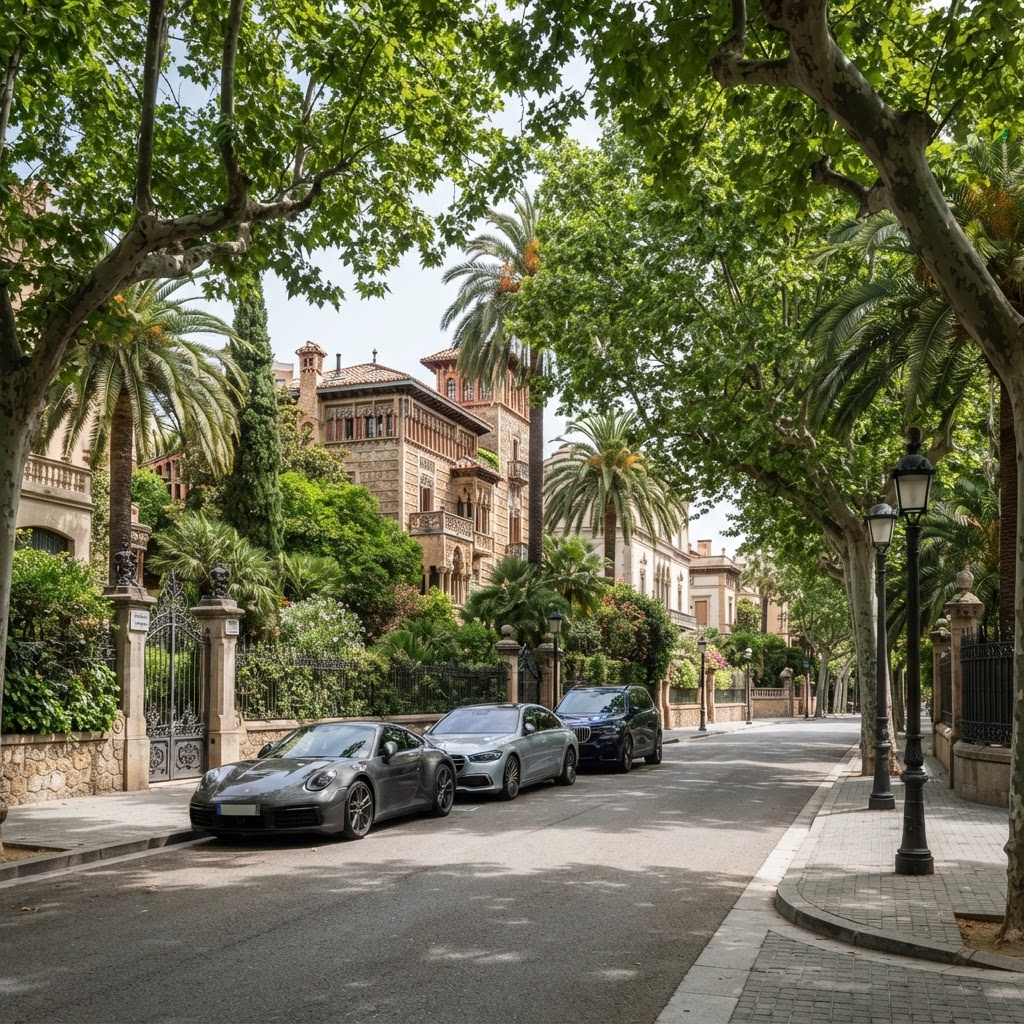
Prime luxury property prices are broadly comparable, with Madrid's most expensive streets (Salamanca district, Recoletos) slightly exceeding Barcelona's Zona Alta at the very top end. In Barcelona, prime districts include Pedralbes, Sarrià, Sant Gervasi, and Turó Park, with prices from €5,000 to €9,000/m². In Madrid, prime districts include Salamanca, Chamberí, and Recoletos, with prices from €5,500 to €10,000/m². Both cities offer off-market opportunities that can represent better value than portal-listed properties, and both have seen resilient luxury prices even amid broader market softening.
Rental Yields: Which City Offers Better Returns?
Madrid typically offers slightly higher gross rental yields (4–5.5%) than Barcelona (3.5–5%), primarily because Barcelona's tourist licence regulations — phasing out short-term tourist rentals entirely by 2028 — have capped the upside that short-term rentals once offered. In Madrid, tourist licence regulation is more permissive in central areas, supporting stronger short-term rental economics. For long-term rental, both cities offer stable demand from international executives, students, and diplomatic tenants. All yield figures are indicative and depend heavily on location, property type, and management.
Free Guide
Barcelona Luxury Property Market Report 2026
Prices, yields, demand & 2026 outlook
International Schools: Does Either City Have an Edge?
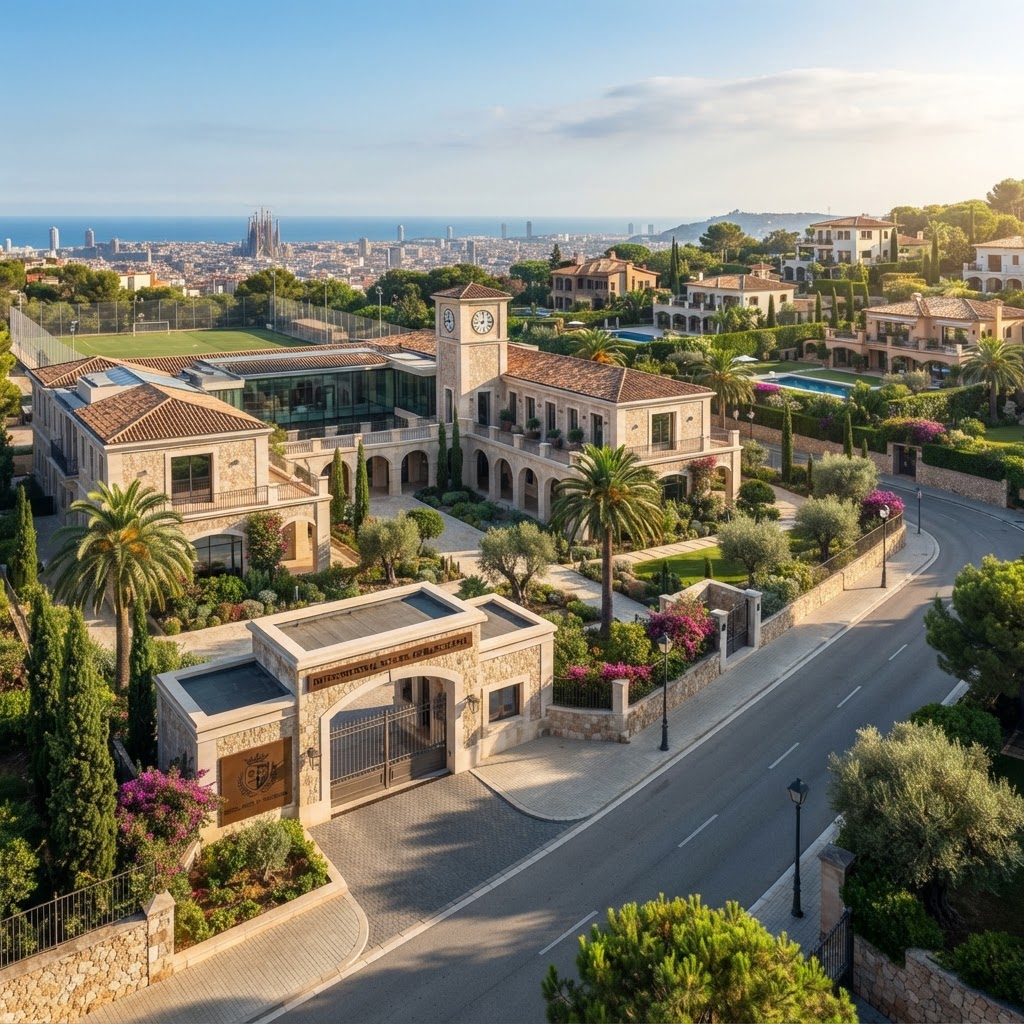
Both cities have deep international school offerings. Barcelona's leading schools include the British School of Barcelona, American School of Barcelona, Lycée Français, Deutsche Schule, Benjamin Franklin, and Hamelin-Laie. Madrid offers comparable institutions, including the British Council School, Runnymede College, the Lycée Français de Madrid, and the Colegio Americano. The depth and quality are similar; the difference is that Barcelona's international schools are concentrated in the Zona Alta (Pedralbes, Sarrià) with easier access to the coast, while Madrid's are spread across the northern suburbs (Pozuelo, Las Tablas) and central Salamanca.
Purchase tax differs by autonomous community. In Catalonia (Barcelona), resale properties are subject to ITP at a progressive rate of 10–13% depending on price, with higher rates on properties above €1.5 million. In the Madrid region, ITP is progressive at 6–11%. New-build purchases attract 10% VAT in both regions. Barcelona city is also phasing out tourist rental licences entirely by 2028, which affects short-term rental investors. Madrid maintains a more permissive stance on tourist licences in central areas. Non-resident income tax (IRNR) applies to rental income in both — 19% for EU residents, 24% for non-EU. We always recommend a Spanish tax advisor for your specific situation.
Family seeking coastal lifestyle & international schools
Barcelona — Zona Alta + coastline
Executive relocating to a multinational HQ
Madrid — closer to corporate ecosystem
Investor seeking higher rental yield
Madrid — marginally higher yields, more permissive rentals
Buyer prioritising Mediterranean lifestyle & second home
Barcelona — coast, climate, culture
Buyer wanting political/financial centrality
Madrid — capital gravitas, grand boulevards
Digital nomad / remote professional
Both — Barcelona for lifestyle, Madrid for networking
Family seeking coastal lifestyle & international schools
Our VerdictBarcelona — Zona Alta + coastline
Executive relocating to a multinational HQ
Our VerdictMadrid — closer to corporate ecosystem
Investor seeking higher rental yield
Our VerdictMadrid — marginally higher yields, more permissive rentals
Buyer prioritising Mediterranean lifestyle & second home
Our VerdictBarcelona — coast, climate, culture
Buyer wanting political/financial centrality
Our VerdictMadrid — capital gravitas, grand boulevards
Digital nomad / remote professional
Our VerdictBoth — Barcelona for lifestyle, Madrid for networking
The honest answer is that neither city is objectively 'better' — they serve different priorities. If your vision includes the sea, a Mediterranean climate, and a design-forward lifestyle, Barcelona is the choice. If you want Spain's business and political centre, grand urban living, and slightly higher yields, Madrid fits. Many of our clients ultimately choose Barcelona for the lifestyle — but we help you think it through honestly before committing.
Myriam Lahlou is the founder of Barcelo Property Invest, an independent buyer's agency representing international clients purchasing property in Barcelona and the surrounding coastal markets. With 20+ years of international real estate experience between Miami and Barcelona, Myriam combines an international perspective with deep knowledge of the Barcelona property market. Barcelo Property Invest represents buyers exclusively, never sellers, and coordinates each acquisition from the initial search through to completion at the notary.
Private Consultation
Request a Private Consultation
Speak directly with Myriam, our independent buyer's agent. A 30-minute private call to discuss your search, answer your questions and explore how we could support your property acquisition in Barcelona.
Tell us what you're looking for and we'll search the wider Barcelona market on your behalf, including off-market and pre-market opportunities where available.
Stay Informed
Get Barcelona luxury property insights, market updates and selected opportunities delivered to your inbox.