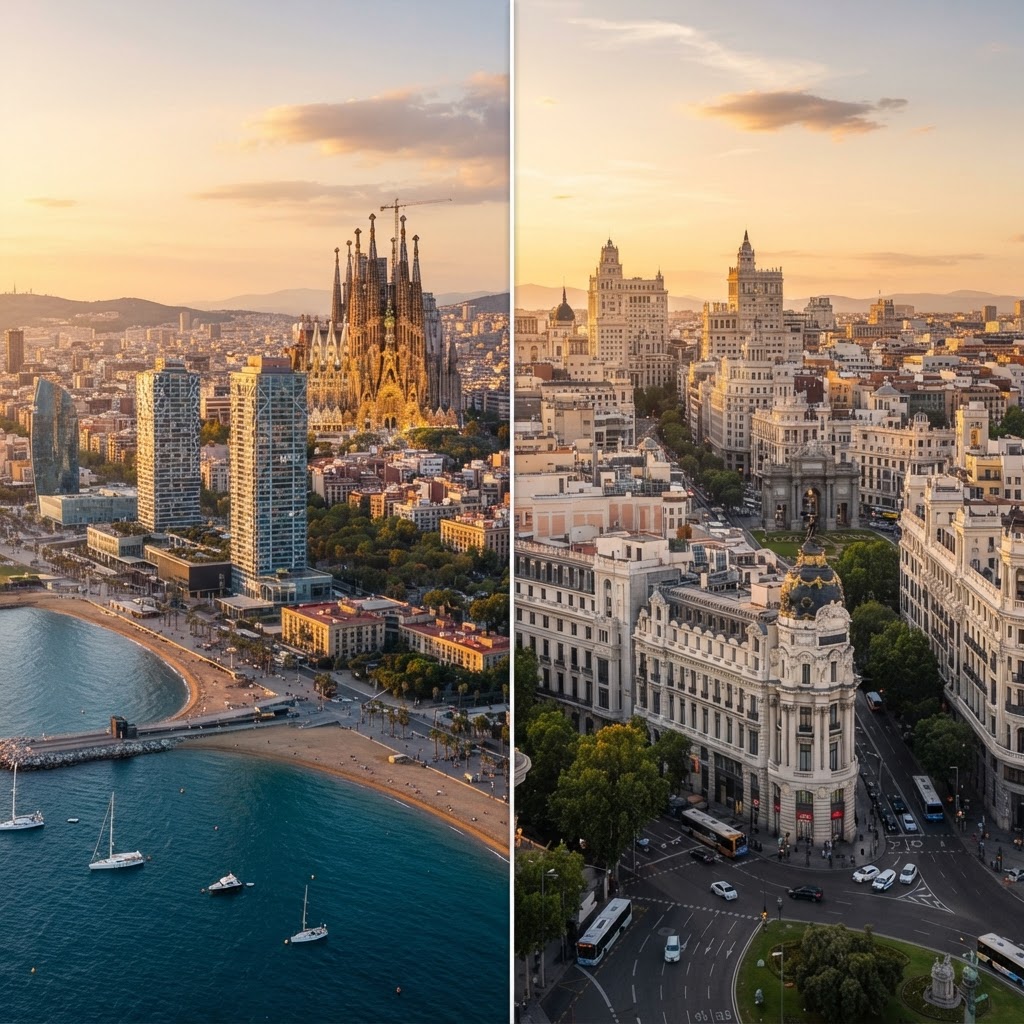

Relocating to Barcelona as a wealthy foreigner is a decision that blends lifestyle ambition with serious financial and logistical planning. The city offers an extraordinary quality of life — Mediterranean climate, a vibrant cultural scene, world-class international schools, and a cost base meaningfully below London, Paris, Geneva, or Zurich. But beneath that appeal lies a residency landscape that shifted in April 2025 with the abolition of the Golden Visa, a property market where the best homes never reach public portals, and a buying process with its own legal and tax particularities. This guide walks through every dimension of the relocation, written from the perspective of an independent buyer-side advisor who represents international clients exclusively — never the seller.
All figures in this guide are indicative, marked for confirmation with verified sources, and provided for educational purposes only — not as legal, tax, or investment advice. Last updated 2026.
Why Are Wealthy Foreigners Relocating to Barcelona in 2026?
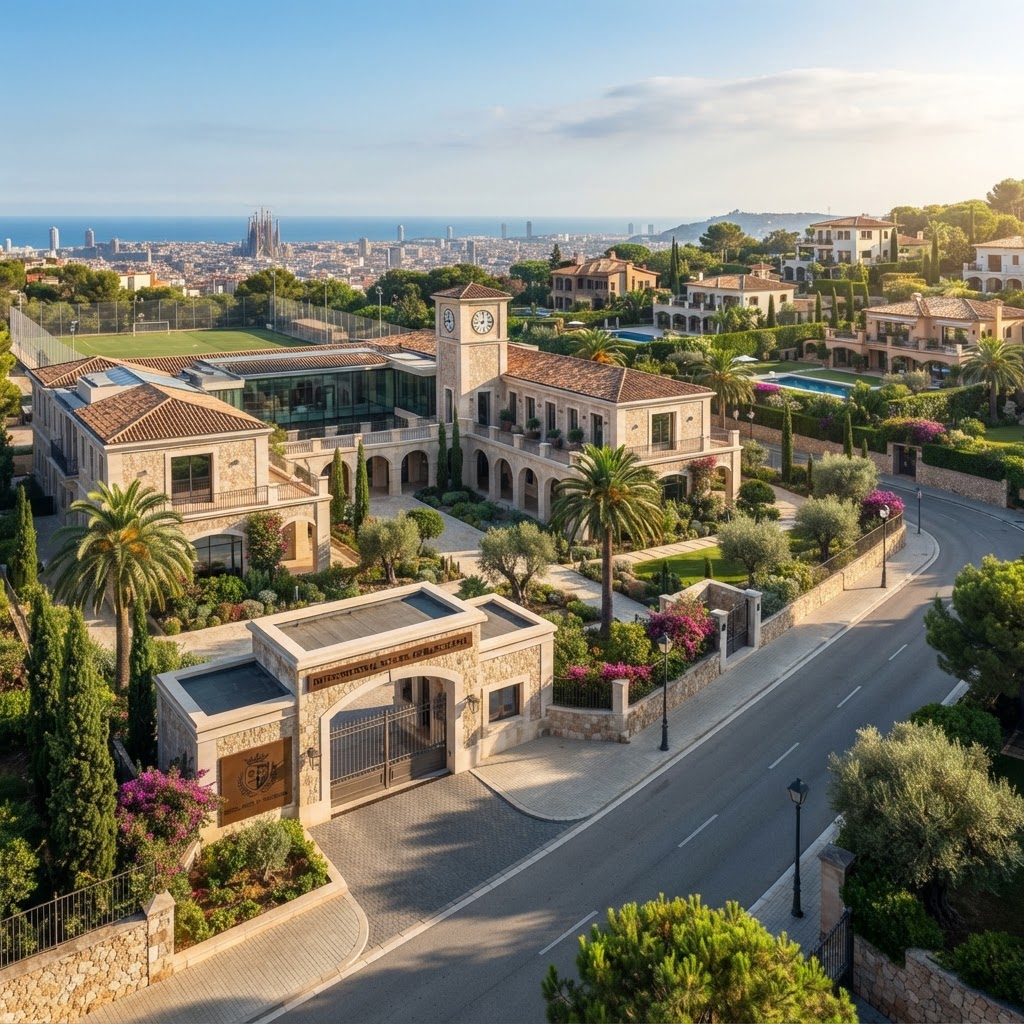
Barcelona's appeal to affluent international families rests on five pillars. First, climate: over 300 days of sunshine a year and a Mediterranean coastline on the doorstep. Second, education: a deep concentration of international schools following British, American, French, German, and IB curricula. Third, value: prime luxury property in Barcelona's Zona Alta trades at €5,000–€9,000/m², compared to €15,000–€30,000/m² in central London or Paris. Fourth, connectivity: Barcelona-El Prat airport offers direct flights across Europe, the Americas, and the Middle East, with the Zona Alta just 15–20 minutes away. Fifth, lifestyle: Michelin-starred dining, golf, yachting, and a cultural heritage few cities can match.
The buyer profile relocating today is distinctly international — European executives, Latin American families, North American remote professionals, and Middle Eastern investors seeking a European base. What unites them is a desire not just for a property, but for a life — and that requires coordinating property acquisition with residency, schooling, and healthcare.
What Visa or Residency Pathway Should You Use After the Golden Visa?
Spain's Golden Visa — which granted residency for a €500,000 property investment — was abolished on 3 April 2025. Existing visas remain valid, but no new applications based on property investment are accepted. The good news: several established residency pathways remain available, none of which require a property purchase.
Non-Lucrative Visa (Visado No Lucrativo)
Designed for those who wish to reside in Spain without working. It requires proof of sufficient financial means — currently around €32,000 in annual income or savings per applicant, with additional amounts for family members — and comprehensive private health insurance. Initially granted for one year, then renewable in two-year cycles. It does not permit employment in Spain, making it ideal for retirees and those with passive income from abroad.
Digital Nomad Visa (Visado de Teletrabajo)
Introduced in 2023 under Spain's Startup Law, this visa allows non-EU nationals to live in Spain while working remotely for employers or clients outside the country. Applicants must earn at least 200% of Spain's minimum interprofessional wage (approximately €2,646/month in 2025) and have at least one year of professional experience. The visa runs up to three years and offers a favourable tax regime under Spain's special expatriate regime (Beckham Law). It is particularly attractive for tech professionals, consultants, and entrepreneurs managing international businesses from Barcelona.
Property purchase is no longer linked to a visa mechanism, but owning a home in Barcelona can support residency renewals by demonstrating financial ties and long-term commitment to Spain. We always recommend consulting a qualified Spanish immigration lawyer for the visa process, while we manage the property side.
Where Should Affluent Families Live in Barcelona?
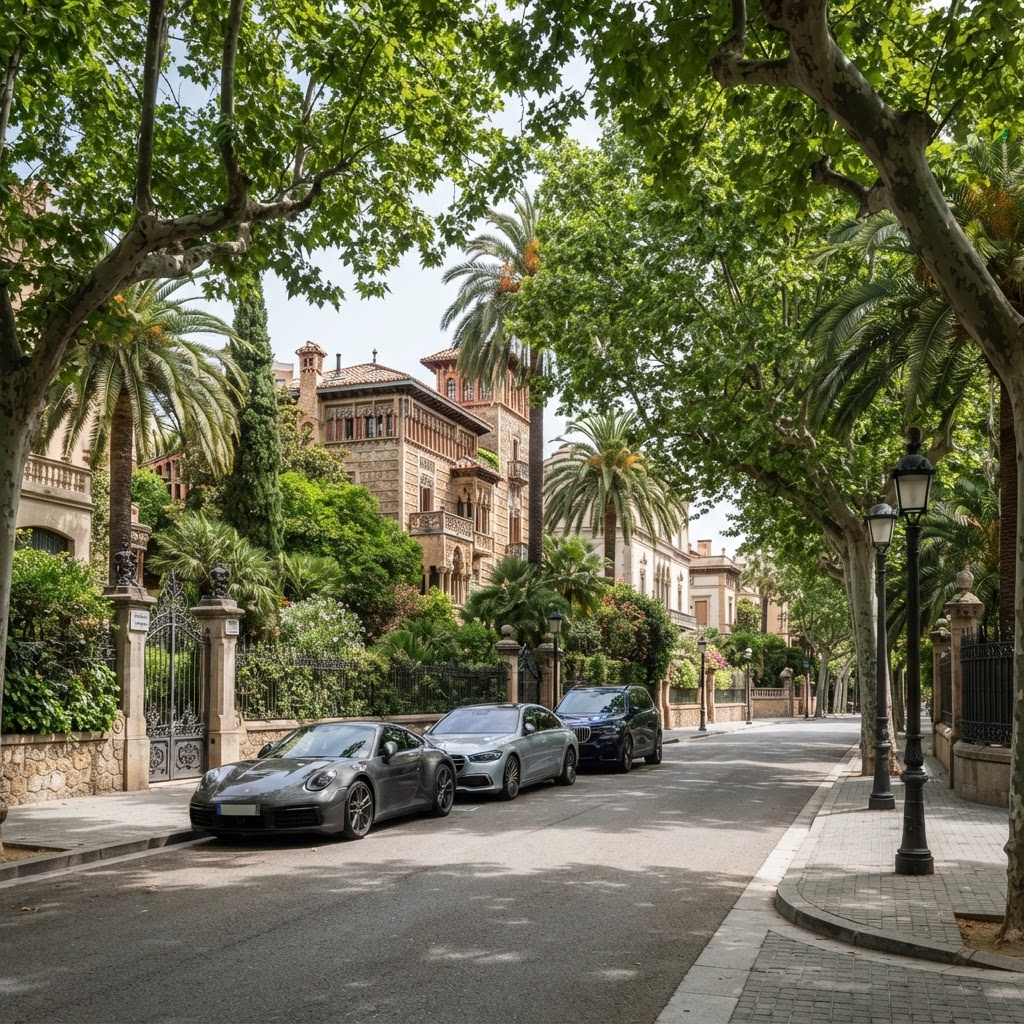
For wealthy relocating families, the Zona Alta — Barcelona's western hillside — is almost always the starting point. It encompasses Pedralbes, Sarrià, Sant Gervasi, and Turó Park, and offers the combination of privacy, international schools, green spaces, and quick airport access that families prioritise. The Eixample offers grand noble-floor apartments for those who prefer central urban living, while Diagonal Mar provides contemporary seafront towers for a modern lifestyle.
| Neighbourhood | Indicative Price/m² | Best For |
|---|---|---|
| Pedralbes | €6,500–9,000 | Families seeking maximum privacy, gated estates, embassies |
| Sarrià | €5,500–8,000 | Village charm, townhouses, international schools |
| Sant Gervasi / Turó Park | €5,000–7,500 | Elegant apartments, walkability, parks |
| Eixample | €5,000–8,000 | Central living, modernist noble floors, penthouses |
| Diagonal Mar | €4,500–6,500 | Contemporary seafront towers, modern amenities |
Note: Price ranges are indicative orientation markers. Actual transaction prices — particularly off-market — may differ from portal data. Confirm with current market sources and a local buyer's advisor.