A new-build or off-plan home in Barcelona can be a very good purchase: modern energy performance, generous terraces, underground parking. It is also a different kind of transaction. You are paying, often over many months, for something that does not yet exist, to a company whose finances a show flat will never reveal. Here is how your money is protected, which taxes apply and which checks matter before you commit.
Why a new build needs a different kind of protection
With a resale, the main risks sit in the past: title, charges, planning history. With an off-plan purchase, they sit in the future. Will the building be finished on time and to the specification you signed? Will the developer still be solvent at handover, and answerable for defects afterwards?
Spanish law answers these questions better than many international buyers expect. The national Building Act, known in contracts as the LOE (Ley de Ordenación de la Edificación), requires developers to guarantee money paid during construction, sets clear periods of responsibility for defects and makes ten-year structural insurance compulsory for housing. But a protection only works if it exists, is correctly documented and is requested at the right moment. At Barcelo Property Invest we are never paid by the developer, so our only job is to make sure those protections exist for you, in writing, before any significant payment leaves your account.
How to structure an off-plan purchase safely
1. Check the developer before you fall for the floor plan
Before reserving, we look at:
• Track record: completed projects, delivery times and after-sales service. A building they delivered a few years ago tells you more than any brochure.
• The building licence: whether the town hall has granted the licence (llicència d'obres), and its reference and date.
• Land ownership: a nota simple, a short extract from the Land Registry (€9.02 plus VAT online), confirms that the developer's company owns the plot and shows any mortgages or charges. A development loan secured on the land is normal; what matters is how it will be cancelled or divided before your deed.
• The financing bank: which bank funds the project, and whether it also holds the buyers' special account and issues the guarantees.
• The specification: the memoria de calidades lists materials, brands and finishes. Attach it to the contract, and look closely at vague wording such as “or similar”.
2. Secure the payment guarantee before you pay on account
Once the building licence has been granted, a developer who takes money from buyers during construction must guarantee its return if the building is not started or not completed within the agreed period. The guarantee takes one of two forms:
• an individual surety insurance policy (seguro de caución) issued for each buyer and identifying the specific home; or
• a bank guarantee (aval bancario) under which the bank answers for the refund together with the developer.
Your payments must go into a special account at a bank, kept separate from the developer's other funds and used only for the construction. The contract should name the insurer or bank, identify that account and state the developer's obligation to refund you if the works do not start or finish on time, or if the occupancy documents are not obtained.
What your individual guarantee should cover. It should be issued in your name, identify your home, and cover every sum you pay on account, together with the VAT on those payments and legal interest. If you later pay for extras or upgrades, ask for the guarantee to be extended to cover them too.
A word of caution on early reservations. Some developers ask for a reservation payment before the building licence has been granted. That money requires particular care, because it may not benefit from the normal statutory guarantee system. Keep any pre-licence reservation modest, make sure the terms for its return are clear and in writing, and have your lawyer review it before you transfer anything.
What to ask for, and when:
• Before reserving: confirm that the building licence exists and ask which insurer or bank will issue the guarantees.
• At the private contract: receive your individual policy or guarantee and check that it covers every payment on account, VAT included, and that the account number matches the contract.
• At each instalment: pay only by traceable bank transfer into the designated account and keep the proof. Every payment made before completion should be listed in the final deed.
• If the development is delayed: you may choose to cancel the purchase and recover what you have paid, with the VAT and legal interest, or to agree an extension recorded in a written addendum to the contract.
If you decide to seek repayment after a delay, send the developer and the guarantor a formal written demand, and take legal advice on how to enforce the guarantee. Timing matters: a bank guarantee can lapse if repayment is not demanded within two years of the developer's breach, so a delay should be managed actively rather than simply waited out.
3. Read the payment schedule alongside the contract
A typical sequence is a reservation payment, a private contract with a first instalment, staged payments during construction and the balance at the notary. The proportions are commercial terms rather than legal requirements, and they can be negotiated. VAT is charged on each payment on account as it is made, so the tax is paid progressively rather than all at completion.
4. Use the customisation window well
Many developers let buyers choose finishes, kitchen options or minor layout changes before a set construction milestone, and that window closes firmly. Have every change priced and signed as a contract addendum, confirm its effect on the delivery date, and ask for any extra sums paid on account to be covered by your guarantee. Good finishes add value; a very personal layout can narrow your resale audience.
5. Handover: documents, snagging and keys
Before completion at the notary, the following should exist and be shared with you:
• Authorisation to occupy the building. In Catalonia this is generally a prior notice of first occupation filed with the town hall (comunicació prèvia de primera utilització i ocupació); a licence is still needed if only part of a building is to be occupied.
• The habitability certificate (cèdula d'habitabilitat), which for a new build is valid for 25 years.
Free Guide
Barcelona Luxury Property Market Report 2026
Prices, yields, demand & 2026 outlook
• The energy performance certificate.
• Evidence of the ten-year structural insurance (seguro decenal), without which the new building cannot be properly declared and registered.
• The building book (Libro del Edificio), which contains the final as-built project, the formal handover certificate and the maintenance instructions.
• The arrangements for the development loan, so that your home is delivered free of the developer's mortgage, or with its share clearly divided and agreed.
Once the occupancy documents are issued and delivery is evidenced, your payment guarantee comes to an end, so this is the moment to be thorough. Before signing the deed, inspect the home with an independent architect or building surveyor and prepare a snagging list (lista de repasos): finishes, joinery, terrace waterproofing, air conditioning, common areas and garage. Agree in writing what will be fixed and by when.
What you pay: new-build taxes compared with a resale
A new home bought directly from the developer (its first sale) pays VAT (IVA) at 10%, never transfer tax (ITP). In Catalonia, the deed also pays 1.5% stamp duty (AJD). A resale pays ITP on the progressive Catalan scale in force since 27 June 2025: 10% up to €600,000, 11% up to €900,000, 12% up to €1,500,000 and 13% above, each rate applying only to its own slice of the price. A resale does not pay the additional stamp duty on the transfer, because that charge applies only to deeds that are not subject to ITP.
€2,000,000 purchase
New build (first sale by the developer)
Resale (second-hand)
Main tax
VAT at 10%: €200,000
Progressive ITP: €230,000
Stamp duty (AJD)
1.5%: €30,000
Not due on the transfer
Total purchase taxes
€230,000 (11.5%)
€230,000 (11.5% average)
When it is paid
VAT with each payment on account and at completion; AJD after the deed
ITP after the deed, through the regional transfer-tax return (Form 600)
Main tax
New build (first sale by the developer)VAT at 10%: €200,000
Resale (second-hand)Progressive ITP: €230,000
Stamp duty (AJD)
New build (first sale by the developer)1.5%: €30,000
Resale (second-hand)Not due on the transfer
Total purchase taxes
New build (first sale by the developer)€230,000 (11.5%)
Resale (second-hand)€230,000 (11.5% average)
When it is paid
New build (first sale by the developer)VAT with each payment on account and at completion; AJD after the deed
Resale (second-hand)ITP after the deed, through the regional transfer-tax return (Form 600)
At €2M the two routes cost exactly the same in tax. Below that level a new build costs slightly more (€115,000 against €105,000 at €1M), and above it slightly less (€345,000 against €360,000 at €3M). Notary, Land Registry and lawyer fees come on top in both cases, and our guide to the true cost of buying in Barcelona sets them out.
Garages, storage rooms and plots
The 10% VAT rate covers the home together with up to two garage spaces and annexes such as a storage room, when they are sold with it. A garage bought separately, commercial premises, offices and building plots pay the general rate of 21%. If you are buying a plot from a developer to build a villa in Sant Cugat or on the coast, budget for 21% VAT on the land.
Renovated buildings sold as “obra nueva” (new build)
Some of the most sought-after new homes in Barcelona are not in new buildings at all, but in period buildings in Eixample or Sant Gervasi rebuilt behind their façades. For tax purposes, what matters is whether the developer's works count as a genuine rehabilitation. Two tests must both be met:
• more than half of the total cost of the works relates to the structure, façades or roofs, or to closely connected works such as structural reinforcement, installing lifts or extending the built area; and
• the works cost more than 25% of the building's value, excluding the land. That value is the purchase price if the developer bought the building in the two years before the works began, and otherwise its market value when the works started.
If both tests are met, the developer's sale is treated as a first sale: 10% VAT plus 1.5% stamp duty. If they are not, as with a high-end interior refurbishment, the sale is exempt from VAT and the progressive ITP applies instead. Ask for the tax treatment to be confirmed in writing before you sign, because “fully renovated” in a listing says nothing about it. See our guide to Eixample penthouses and noble floors.
What protects you after completion
The developer and the professionals who built the property remain responsible to you for physical defects during three periods:
• 10 years for structural defects in the foundations, columns, beams, floor slabs or load-bearing walls that put the building's stability at risk. These are covered by the compulsory ten-year insurance (seguro decenal).
• 3 years for defects in building elements or installations that make the home fall short of habitability standards, such as serious damp or failed waterproofing.
• 1 year for defects in the builder's finishing work.
These periods run from the formal handover of the works from the builder to the developer, not from the day you receive your keys. If your own handover comes months later, part of the one-year period may already have passed, so report snags promptly and in writing.
A separate deadline for making a claim. Being within the one-, three- or ten-year period is not enough on its own. Once a defect appears, a claim against those responsible generally has to be brought within two years of the damage occurring. If you discover a significant defect, document it, notify the developer in writing and speak to a lawyer without delay.
Homes built by private individuals. There is one exception to the insurance rule. An individual who built a detached single-family home for their own use was not required to take out ten-year insurance during construction. If that owner sells within ten years, they must take out cover for the remaining period, unless the buyer expressly releases them from that obligation. Think carefully, and take advice, before signing such a release.
Where prime new builds appear in and around Barcelona
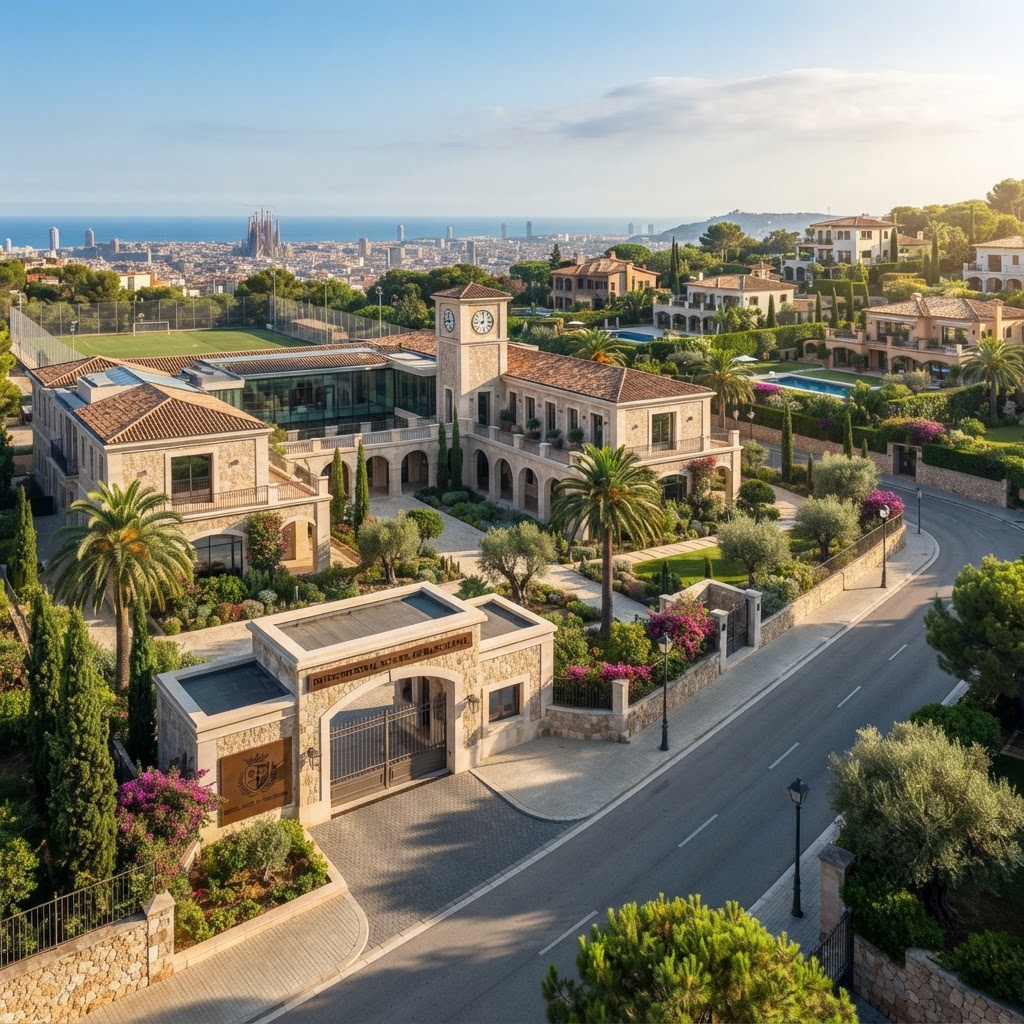
Luxury new-build supply is limited and scattered. Along the Diagonal Mar seafront, contemporary residential towers and complexes often combine sea views with shared pools. In Eixample and the upper neighbourhoods, the offer is more often a rehabilitated period building with a handful of apartments and a penthouse. Outside the city, Sitges and the Maresme coast see small developments and individual villas, while Sant Cugat attracts families looking for modern houses with gardens.
When to bring in your advisers
Involve an independent Spanish lawyer before you pay any reservation, to review the guarantee, the contract and the developer's position. Bring in an architect or building surveyor before you sign the deed, to inspect the home and prepare the snagging list. Speak to a tax adviser early if you are buying through a company, buying a renovated building whose tax treatment is unclear, or planning to rent the property out.
Buying new or off-plan should feel calm, never like a leap of faith. Myriam Lahlou and the Barcelo Property Invest team work only for buyers: we review developers, coordinate your lawyer and architect, check the guarantees and follow the project through to the keys. If you are considering a new build in Barcelona or on the coast, book a private consultation and we will tell you honestly whether the project deserves your time.
This article is general information, not legal or tax advice; please confirm your own situation with an independent Spanish lawyer or tax adviser.
Sources: Spain's Building Act (Ley 38/1999, LOE) for payment guarantees, defect periods and ten-year insurance; the Spanish VAT Act (Ley 37/1992) for VAT rates and the rehabilitation tests; Catalan tax and planning legislation for the ITP scale, stamp duty and occupation of new buildings.
A new home bought directly from the developer pays 10% VAT (IVA) plus 1.5% stamp duty (AJD) in Catalonia, and never transfer tax (ITP). A resale pays ITP on the progressive Catalan scale of 10% to 13%. On a €2M purchase both routes come to €230,000 in tax; below that a new build costs slightly more, and above it slightly less.
Once the building licence has been granted, the developer must guarantee every payment you make on account, with VAT and legal interest, through an individual insurance policy or a bank guarantee. Your payments must go into a special account used only for the construction. Ask for your individual guarantee document when you sign the private contract, before paying any instalment, and treat any reservation paid before the licence with particular care, as it may fall outside this protection.
The seguro decenal is compulsory ten-year insurance for structural defects in buildings used mainly as homes. The developer and builders are also responsible for habitability defects for three years and for defects in finishes for one year. All three periods run from the formal handover of the works to the developer, not from the day you receive your keys, and a claim generally has to be brought within two years of the damage appearing.
Only if the developer's works count as a genuine rehabilitation: more than half of the cost must relate to the structure, façades, roofs or closely connected works, and the works must cost more than 25% of the building's value, excluding the land. If so, the sale pays 10% VAT plus 1.5% stamp duty. If not, it is exempt from VAT and ITP applies, so ask for the tax treatment in writing before signing.
Sign once occupation of the building has been authorised, the habitability and energy certificates are available, the ten-year insurance and building book are in place, and you have inspected the home with an independent professional. Record any snags in writing with an agreed timetable for repairs. Your payment guarantee ends once the occupancy documents are issued and delivery is evidenced, so these checks matter.
Share this article
About the Author
Myriam Lahlou
Founder & Buyer's Agent, Barcelo Property Invest
Myriam Lahlou is the founder of Barcelo Property Invest, an independent buyer's agency representing international clients purchasing property in Barcelona and the surrounding coastal markets. With 20+ years of international real estate experience between Miami and Barcelona, Myriam combines an international perspective with deep knowledge of the Barcelona property market. Barcelo Property Invest represents buyers exclusively, never sellers, and coordinates each acquisition from the initial search through to completion at the notary.
Private Consultation
Request a Private Consultation
Speak directly with Myriam, our independent buyer's agent. A 30-minute private call to discuss your search, answer your questions and explore how we could support your property acquisition in Barcelona.
Tell us what you're looking for and we'll search the wider Barcelona market on your behalf, including off-market and pre-market opportunities where available.
Stay Informed
Get Barcelona luxury property insights, market updates and selected opportunities delivered to your inbox.